What is store analytics? Five data sources
Store analytics turns what happens in a physical store into data. The five data sources, the question each one answers, and where to start.
A people counter counts how many people enter a store and, with sales, gives the conversion rate. The technologies differ a lot, from a beam across the door to a 3D camera above the entrance. Which fits when, how to test accuracy, and what to check on privacy.
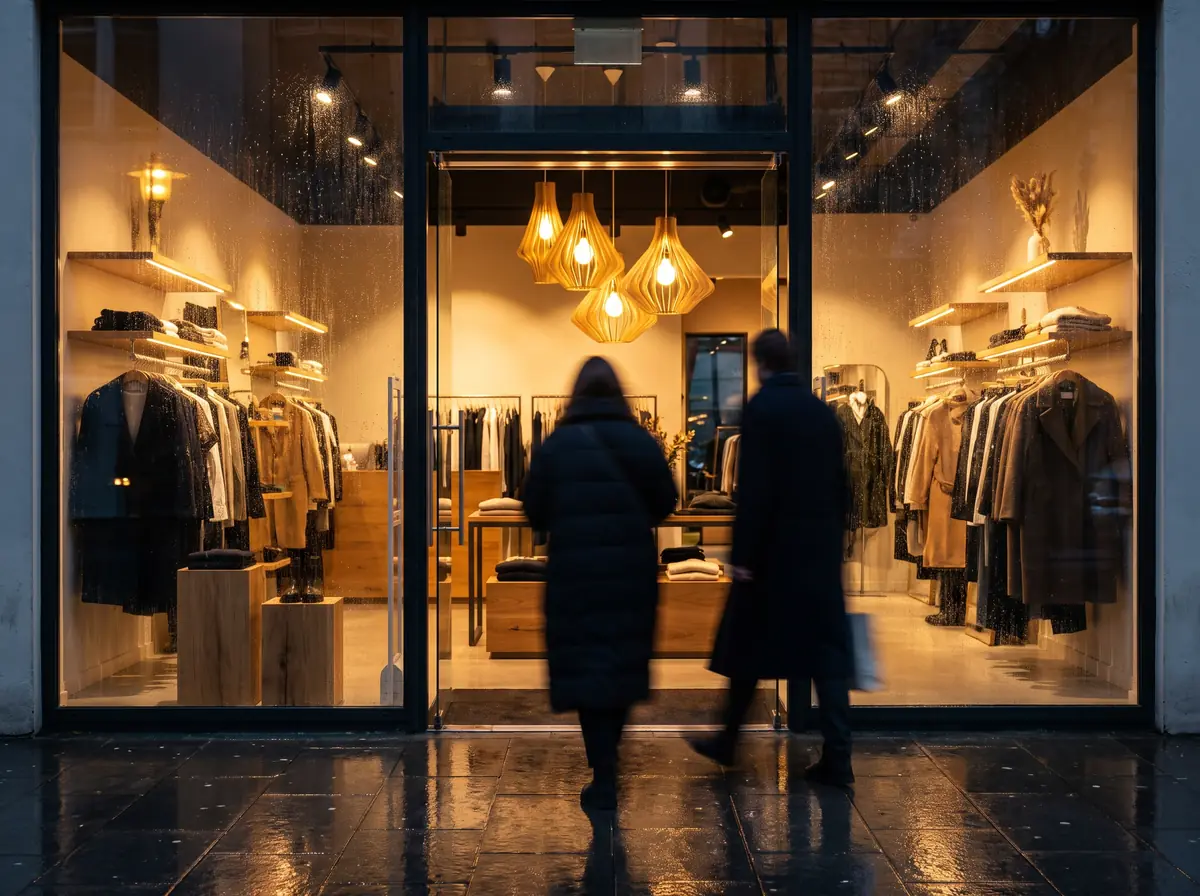
A people counter is a device and software that counts the people passing through an entrance, with their direction: how many came in, how many left, how many were inside each hour. Joined with sales it gives the store's conversion rate (buyers / visitors). A counter does not need to know who anyone is; a good one only counts the crossing.
| Technology | Strength | Weakness | Where it fits |
|---|---|---|---|
| Infrared beam | Cheap, simple to install | Counts two people side by side as one, weak on direction | Narrow, low-traffic entrances |
| Thermal sensor | Takes no images, unaffected by light | Harder to separate people in crowds and warm spaces | Where privacy comes first |
| 3D / stereo camera | High accuracy in crowds, direction and height | More expensive, depends on ceiling height | Busy store and mall entrances |
| 2D camera with AI | Can use standard hardware, open to further analysis | Sensitive to light and angle; installation quality decides | Stores that will use the camera for other measures too |
| Wi-Fi / Bluetooth | No hardware at the door, wide area | Sees only phones that are switched on; an estimate, not a count | Mall-level trends; weak for store conversion |
A vendor's accuracy figure comes from its own test setup; your door, light and shopper flow are different. During a pilot, count the entrance by hand for one busy and one quiet hour and compare with the system. Look especially at:
Counting does not require recognising anyone. For a camera-based counter, ask: where are images processed (on the device or in the cloud), are images stored, is there face recognition or recognition of the same person across visits? Systems that process images on the device and send only the count are the easiest to explain to shoppers and to a data-protection officer. This is not legal advice; ten questions to ask are in the privacy checklist.
GoTrack's focus is product analytics: which product shoppers pick up, how long they hold it and whether they put it back. For stores that also need visitor numbers, it counts on request with the same standard cameras, anonymously and without face recognition, set up per project. If you only want to count the door, a dedicated counter is enough; if you also want product interaction, one system can replace two. The difference is in the product analytics vs people counting comparison.
On request, yes. GoTrack's standard reports are about products: what shoppers pick up, hold and put back. For stores that also need visitor numbers, GoTrack can count visitors with the same cameras, anonymously and without face recognition; it is set up per project.
On request, per project. GoTrack counts visitors with the same cameras, anonymously and without face recognition. Tell us which entrances or areas to count and it is set up for that store.
Yes. Product analytics is GoTrack's core, and visitor counting can be added on request with the same cameras, so both come from one system.
People counters count who comes in, heatmaps show where people walk, and shelf recognition checks what is on the shelf. GoTrack measures what shoppers do with the products themselves: which product and colour is picked up, how long it is held, and which are put back or compared. Visitor counting can be added on request.
Yes. The retailer, as data controller, informs shoppers, and the notices should describe the analytics, not only security cameras. GOTONOM provides the technical description your legal team needs.
Visitors, product interest or both? We will plan the setup that fits your stores.
or write to info@gotonom.com